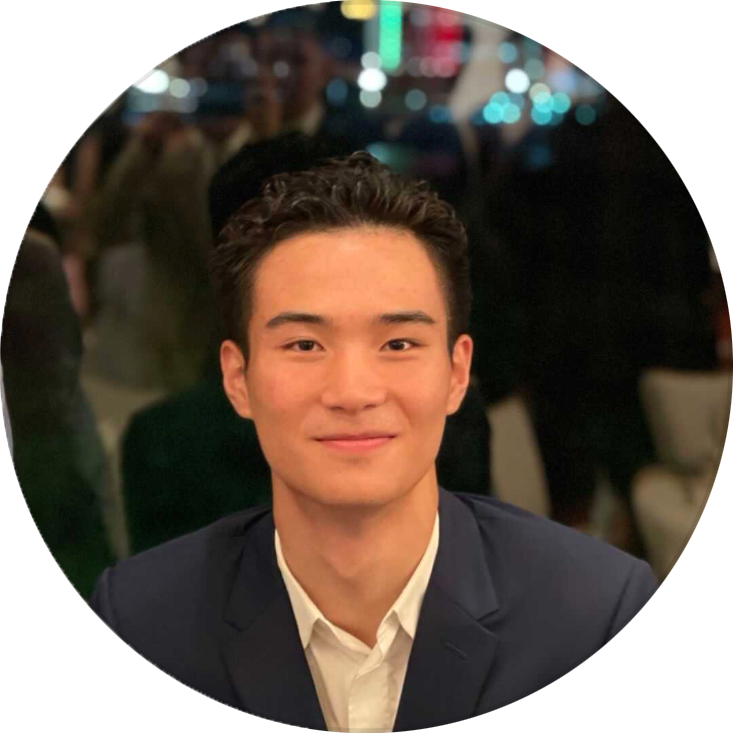
Xingjian (Nicholas) Lyu
I am a senior pursuing a degree in physics with computer science secondary at Harvard university.
Organization
- Theoretical research: overview of my research publications.
- Experimental projects: summary of my hands-on experience in quantum experimentation.
- Notes and teaching materials: a collection of my notes from coursework, self-study, and teaching assistance; they offer a growing set of tools for tackling research problems.
- CV: detailed contents can all be found on this site.
Research interest
I’m interested in the intersection of physics and computing, which leads naturally to the study of quantum computation and information. I wish to explore the theoretical underpinnings and the experimental realization of quantum computational systems.
- My theoretical research investigates the classical-quantum boundary in computational systems. A central perspective is the necessity and sufficiency of Gaussianity for the classical simulability of both fermionic and bosonic quantum systems; this also highlights the deep connection between simulability and the structure of quantum phase space.
- My experimental experience focuses on the practical aspects of quantum computation. Working in a neutral atom array lab provided me with firsthand experience in organizing well-understood physical tools—such as lasers and atom-light interactions—with classical control systems to facilitate quantum computation.
Education background
My interest in the physicality of computation began with coursework in theoretical computer science, systems, and compiler design. This background inspired a shift toward physics, leading me to pursue the standard physics curriculum and, in addition, mathematical physics, information theory, and quantum computation. My background in these subjects (links to notes):
Diploma: A.B. in Physics, Harvard University
- Physics: classical mechanics, quantum mechanics (2 semesters), general relativity, E&M, thermodynamics, optics.
- Computer science: theoretical computer science, functional programming, systems programming, compilers, etc.
- Mathematics: abstract algebra (self-study), topology (Math 55b), functional analysis (ongoing), category theory (self-study), basic differential geometry (self-study).
- Other: quantum computation (2-semesters), classical information theory, statistical inference.